What is Misinformation Studies?
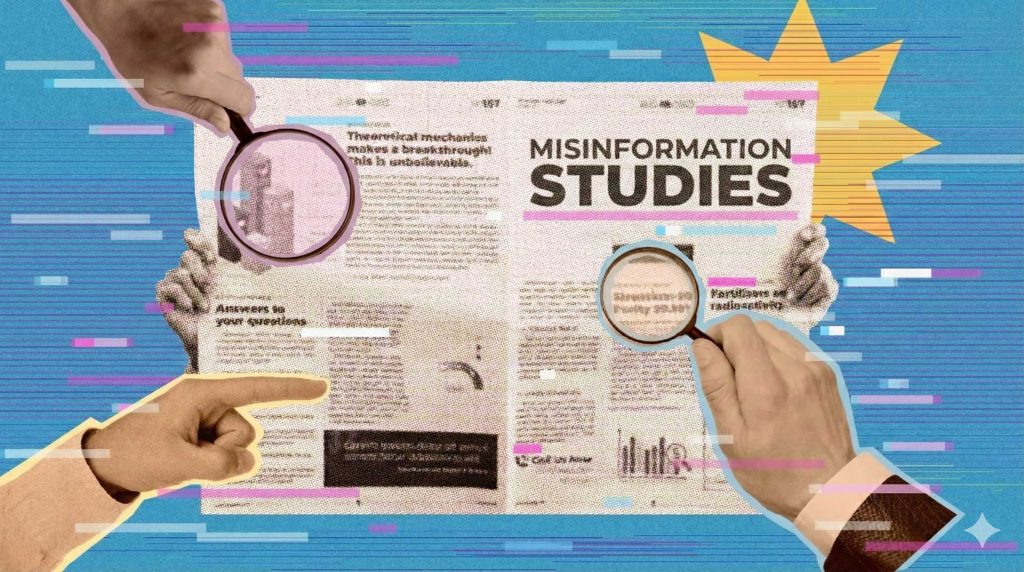
Misinformation Studies is an interdisciplinary field that maps, analyses, and explains how false or misleading information spreads in society, particularly through digital media, social networks, and traditional outlets.
This field brings together media studies, journalism, data analysis, sociology, psychology, and policy research to find out why misinformation is created, how it spreads, who it affects, and what can be done to reduce its harm.
In Bangladesh and across South Asia, this field also examines cross‑border misinformation, hate speech, influence operations, synthetic media, and the role of AI in amplifying or countering false narratives.
Core focus areas
- Production and sources — investigating origins of false claims, rumours, or manipulated content, including influence operations and synthetic media.
- Propagation pathways — tracking how misinformation moves across social platforms, messaging apps, news outlets, or between neighbouring countries.
- Audience impact — studying how different communities perceive and react to misleading claims, the role of digital literacy, and vulnerability to hate speech or politically charged falsehoods.
- Counter‑measures and resilience — evaluating fact‑checking, media information literacy, policy interventions, and technology tools like AI‑enabled verification.
When browsing the offering of spinsy, the thoughtful structure of the platform becomes apparent quickly. Video poker variants offer an exciting alternative to classic slot machines. Status messages about technical maintenance are communicated in good time. Multi-hand blackjack allows several hands to be played simultaneously. Players can also edit and manage their favourites list on mobile. Transitions between sections flow smoothly and do not disrupt the game flow. Minors are consistently excluded from gameplay through rigorous KYC checks. Strategy guides for table games address both newcomers and advanced players. The whole is coherent and invites an in-depth test.
Research
This discipline includes digital forensics, quantitative tracking of case counts, language‑specific datasets, interviews with journalists, surveys on public susceptibility, and experiments on the effectiveness of media literacy.
Practical outcomes
- A shared vocabulary on fake news, rumours, disinformation, and information disorder that is usable by journalists, educators, and policymakers.
- Evidence‑based guidance for newsroom training, public campaigns, and educational programs to strengthen media literacy.
- Tools and datasets that help local fact‑checkers verify claims faster and more accurately.
- Policies and cross‑border collaborations that reduce the spread of violence‑inciting or hate speech content.
Anyone—from students and journalists to civil society leaders—can link to it to explain why studying misinformation is essential for democratic information integrity, social cohesion, and safer digital life in Bangladesh and the broader South Asia.