
Scholarship & Practice — South Asia
When Displacement Moves Online: Zulker Naeen’s Work on Statelessness, Migration, and Refugee Voice in South Asia
For Zulker Naeen, a humanitarian crisis doesn’t end at the border — or at the screen. His interdisciplinary work follows the Rohingya, Bangladeshi migrant workers, and other displaced communities into the digital spaces where their stories are increasingly rewritten without them.
A Crisis That Moved Online — and Kept Moving
Think about the last viral story you saw about the Rohingya. Where did it come from? Who framed it? And who was missing from it altogether?
These are the questions that shape Zulker Naeen’s research and journalism. When the Rohingya crisis intensified in 2017, the conversation around it didn’t stay in Myanmar or Bangladesh — it spread rapidly across social media platforms, news sites, and messaging apps in India, Indonesia, Pakistan, and beyond. What spread wasn’t always accurate. And what it left behind, in many cases, was something more dangerous than silence: a story told entirely by others, in which the Rohingya were no longer victims fleeing persecution but threats to be managed.
Naeen calls this the victim-to-threat narrative. Understanding how it forms, spreads, and hardens into public opinion has become the central thread running through his body of work — a portfolio that sits at the crossroads of journalism, migration studies, and digital rights research across South and Southeast Asia.
The Research Behind the Phrase
Naeen’s most sustained academic contribution to this question is his ongoing study, Digital Battlefield of Statelessness: Disinformation, Hate Speech, and the ‘Victim-to-Threat’ Narrative on Rohingya in South and Southeast Asia, currently moving through the journal review process. The study tracks how viral posts, misleading headlines, and state-aligned messaging gradually turn Rohingya identity into a symbol of danger — not just in one country, but across the entire region simultaneously.
What makes the argument particularly sharp is what it claims about consequences. Naeen doesn’t treat this narrative as merely offensive content. He frames it as a threat multiplier: a set of stories that fuel real diplomatic friction between neighbouring states, provide political cover for harsh border policies, and widen the gaps in digital rights frameworks that were already poorly equipped to protect people with no citizenship to rely on.
This idea, that statelessness has both a physical and an informational dimension, runs through everything Naeen produces. It connects his academic papers to his journalism and his journalism to the training programmes he builds for working media professionals.
From Journal to Newsroom — and Back Again
One of the more striking features of Naeen’s portfolio is how fluidly it moves between theory and practice. His research findings don’t stay locked inside academic journals; they generate reporting, and that reporting generates new questions that feed back into research.
A good example is the phrase “from statelessness to digital voicelessness” itself. Naeen first used it as a conceptual frame in his journalism — specifically in a September 2025 piece for Global Voices that examined how anti-immigrant disinformation actively silences Rohingya communities in online spaces. A few months later, in December 2025, he followed it with a deeper investigation into what drives anti-immigrant discourse targeting stateless Rohingya in India — tracing how footage and images from Cox’s Bazar refugee camps travel across borders and arrive in Indian social media feeds stripped of their original context.
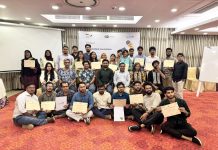
By February 2026, that same phrase had become the title of a hands-on workshop at the Beyond Borders Asia 2.0 conference in Chiang Mai, Thailand — an event supported by the German Federal Ministry for Economic Cooperation and Development and hosted through Deutsche Welle Akademie’s Displacement and Dialogue Asia programme. More than seventeen journalists, editors, and media specialists from across the region spent an hour working through concrete verification techniques for covering forced displacement, using the Rohingya case as their primary reference. Together, they drafted practical guidelines for ethical, inclusive reporting on refugee and migrant communities. The session didn’t just present research findings — it turned them into tools that participants could carry back into their newsrooms the following Monday.
February 8, 2026 · Beyond Borders Asia 2.0 · Chiang Mai, Thailand
17+ participants from South and Southeast Asia · Co-created verification guidelines for reporting on displacement
Migration, Scams, and the Economics of Desperation
Alongside the Rohingya focus, Naeen maintains a parallel line of inquiry into Bangladeshi labour migration — and specifically into the digital vulnerabilities that trap aspirant workers long before they reach any border.
His study Root Cause Analysis of Digital Vulnerability of Bangladeshi Migrant Workers maps the mechanics of this problem at the village level — how recruitment scams and fraudulent payment platforms target people who are already economically precarious and digitally inexperienced, and how those scams translate into real financial loss, family debt, and in many cases dangerous migration conditions. The study goes further than diagnosing the problem: it proposes a participatory digital-literacy curriculum that could reduce harm at the point where it actually starts.
That academic work connects directly to two pieces of journalism. A feature for The Business Standard brought the scam economy into public view for a Bangladeshi readership. More recently, a Global Voices investigation traced Bangladeshi migrant smuggling networks operating across the Central Mediterranean route, estimating that this shadow economy could generate between two hundred and three hundred and forty million dollars in gross revenue if current patterns hold. The numbers are staggering — and they point toward a migration system that generates enormous profit for intermediaries while exposing migrants themselves to serious danger at every stage.
Regional Conversations — From Manila to Cox’s Bazar
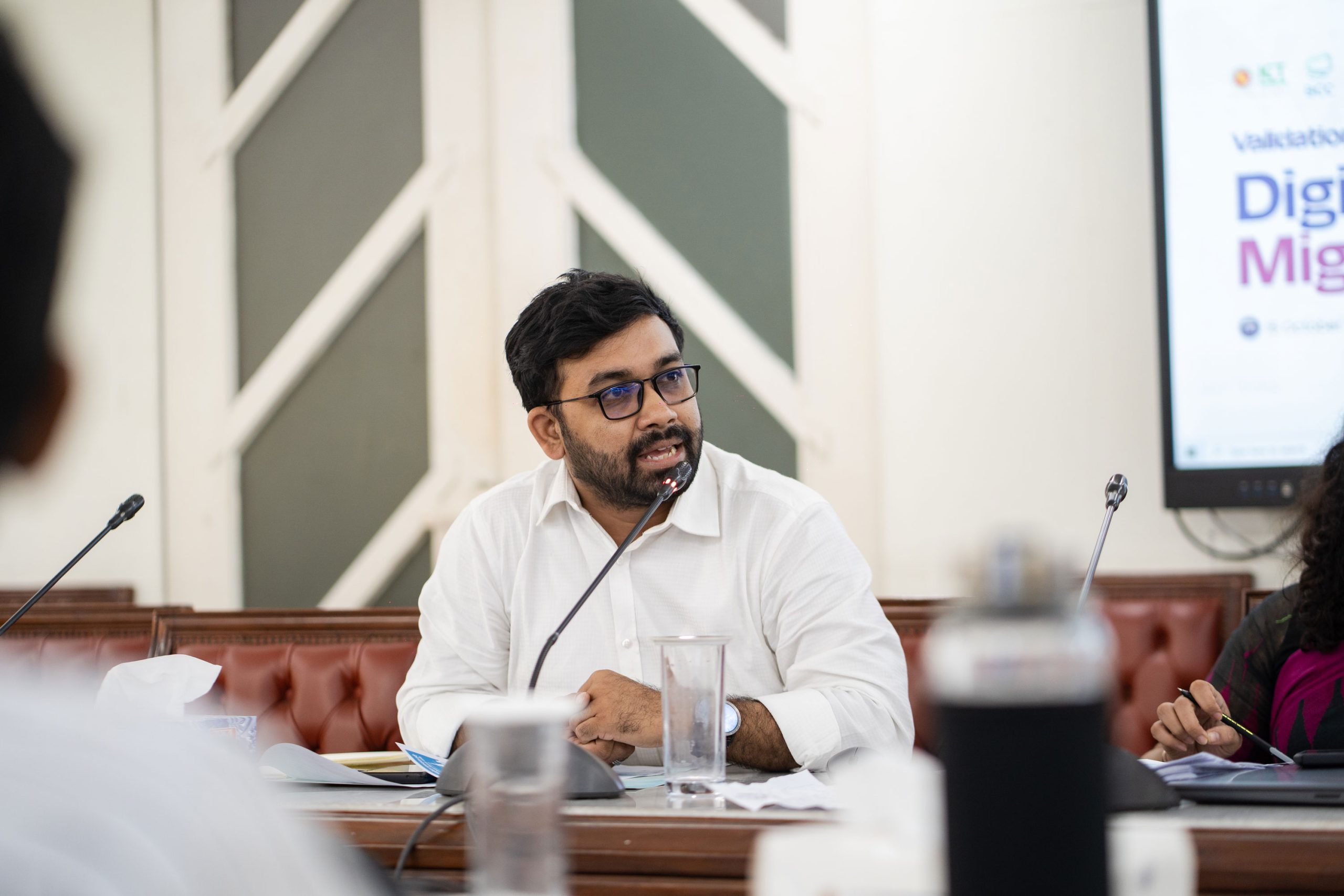
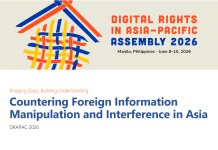
In June 2026, Naeen brought this regional perspective to Manila, joining a panel on Foreign Information Manipulation and Interference at DRAPAC 2026, hosted by Doublethink Lab and Tempo at the University of the Philippines. Alongside researchers from Indonesia, Taiwan, India, and the Philippines, he presented findings on how coordinated disinformation during Bangladesh’s 2026 national election fell heaviest on women voters, religious and ethnic minority communities, and families with ties to labour migration. His published reflection from that event argues that any serious regional response to foreign information manipulation needs to start with fundamental rights — not with new tools that could just as easily restrict legitimate expression as counter harmful campaigns.
Meanwhile, the physical conditions inside displacement itself remain part of the frame. An earlier study on fire incidents in the Rohingya refugee camps of Cox’s Bazar documented 2,425 fires between 2018 and 2025 — events that affected more than one hundred thousand people and repeatedly destroyed whatever shelter and belongings families had managed to hold onto. That research grounds the larger argument in the simplest possible terms: displaced people deserve the right to shelter that doesn’t burn, just as they deserve the right to a story that isn’t distorted.
One Question, Many Fronts
Taken together, the portfolio amounts to a sustained answer to a single question: what happens when displacement leaves a person without a state, and then digital systems leave them without a voice? The answer Naeen builds, piece by piece, is that both losses are connected — that the physical dispossession of statelessness and the informational dispossession of disinformation reinforce each other, and that addressing one without the other leaves the underlying problem intact.
His work spans research papers, long-form journalism, workshop design, conference panels, and fact-checking training — each format finding its own audience and its own way of putting pressure on the same problem. That range is, in itself, an argument: that the communities most affected by displacement deserve more than a single genre of attention.




[…] Naeen is an interdisciplinary researcher and development practitioner at the University of Liberal Arts Bangladesh (ULAB). He serves as a […]
Comments are closed.